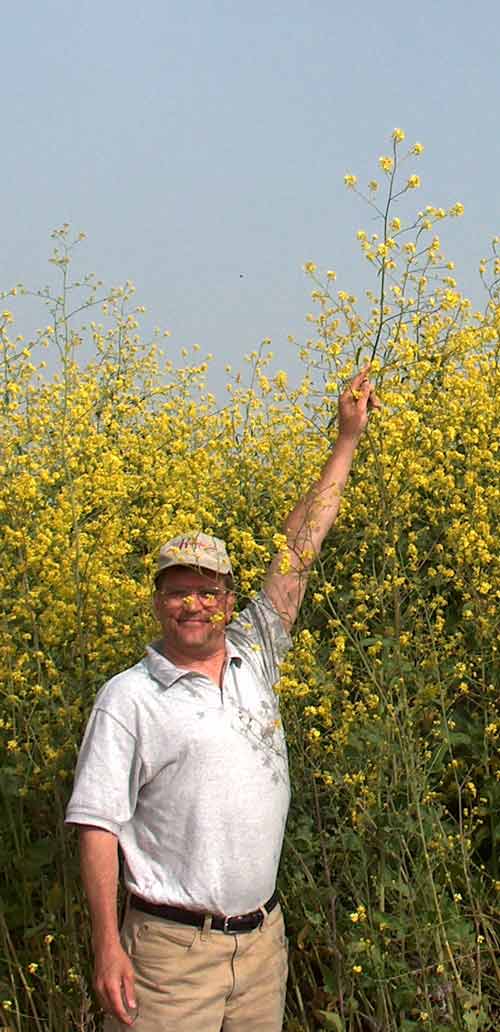
(April 19, 2005) Golan Heights near Avne Etan
ISRAEL PHOTOS III -- A COLLECTION OF PHOTOS FROM ISRAELWITH DESCRIPTIONS OF SCENES AND SITES PERTINENT TO THE STUDY OF CHRISTIANITY |
(April 19, 2005) Golan Heights near Avne Etan
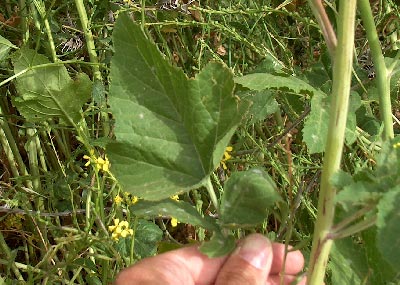
April 2005 Golan
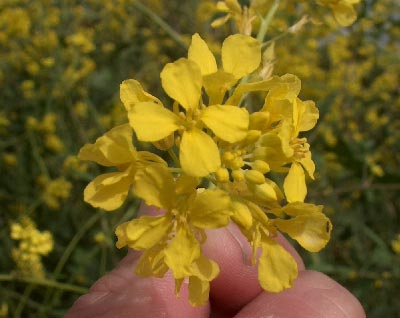
April 2005 Golan Mustard Flower - black mustard
MARK 4:30 (WEB) He said, “How will we liken God’s Kingdom? Or with what parable will we illustrate it? 31 It’s like a grain of mustard seed, which, when it is sown in the earth, though it is less than all the seeds that are on the earth, 32 yet when it is sown, grows up, and becomes greater than all the herbs, and puts out great branches, so that the birds of the sky can lodge under its shadow.”
There is a statement in some Gospel translations describing the mustard plant as a tree with birds lodging in its branches. It can be a tall annual, but there was no mustard tree growing along the shores of the Sea of Galilee. I have seen sparrows and a finch resting on mustard plants, but not nesting there. Something was lost or distorted in translation and copying. The Bible is part fact and part fiction. In no way shape or form is it inerrant. Some people have learned of God's salvation by reading and understanding the better parts of the Bible.
The mustard type shown above grew wild in fields and along roadsides around Galilee. I observed a mustard plant in the southern Golan near Avne Eitan and measured its height to be 8'10". In my opinion there might have been taller mustard plants that I have not measured due to the fact I had spent little time in Israel or was unable to stop along a busy highway to measure a giant plant near Haipha. There were published accounts from travelers from the 19th century onwards of mustard plants from 10-16 feet tall without photos.
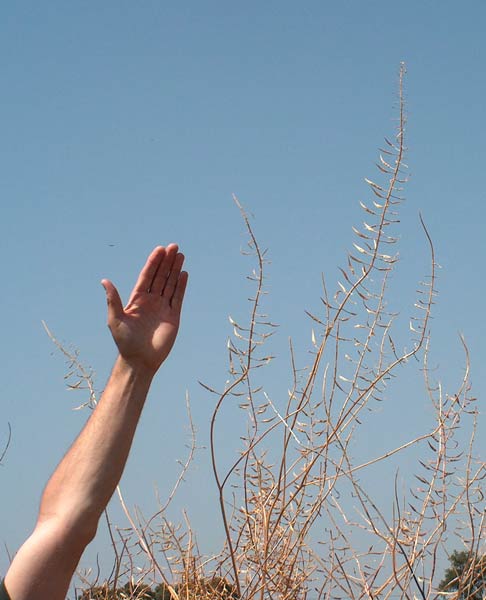
April 2005 -- Jordan River Delta area
There were tall mustard plants near where the Jordan River flowed into Lake Galilee/Chinnereth. During mid-April of 2005 these had produced seed pods and dried up after the winter rains stopped.
From a report about mustard oil seed crops in India
from 1976, India accounted for 30% of world production. Indian mustard
production accounted for 9% of Indian agricultural production. The seeds
were grown for their edible oil content. They contained 30-48% of their
weight in oil. During the time of the study it was generally more
profitable for a farmer to sow mustard seeds rather than wheat in terms
of return on investment and acreage used. Pliny the Elder listed
numerous oil bearing plants from Egypt in his Natural History. Healthier
mustard oil hybrids were developed in the 20th century with lower levels
of some organic compounds that were shown to be toxic to animals.
According to the Talmud, dating to the days of Jesus, mustard may have
been used in a sauce as a condiment for meat.
1) AN AGRIBUSINESS STUDY OF THE ...MUSTARD SYSTEM, BY K.K.S.
CHAUHAN CMA MONOGRAPH #52, 2) MUSTARD: BRASSICA NIGRA L. CULTIVATION,
PROCESSING AND MARKETING IN SRI LANKA, BY ARIYA ABESINGE, MINISTRY OF
PLANTATION INDUSTRIES COLOMBO 1. JAN. 1975, 3) Mustard Marketing
in Western Tarai, Ministry of Land Reform, Agriculture & Food
Agricultural Economics Section Singha Durbar, Sept. 1967
(Nepal).
Roman era oilseed production and oil extraction in Egypt after Pliny
According to archaeologist James Melaart, the ancient inhabitants of Catal Huyuk in Turkey had extracted vegetable oil from almonds, acorns, pistachios, and crucifers (mustard family vegetables). This occurred during a time from about 6500 B.C. to 5500 B.C. Earliest Civilizations of the Near East, James Melaart, 1965.
Mustard greens are heart and brain healthy. A
diet discovered by a Rush University researcher indicated greens
including mustard greens are part of their "MIND Diet" that reduces the risk of
Alzheimer's Disease by more than 50%. The diet was published in 2015 and
is called the "Mind Diet," as it reduces risk of cognitive impairment in
older people at risk of dementia. Mustard greens contain vitamin K, A,
C, E, B, protein, minerals, phytochemicals and flavonoids. https://dqhall59.com/israelphotosV/birdsinmustard.htm Israel Photos IV Giant Mustard Page Parable of the Mustard Seed
A Mustard Field Along Highway 87-North Shore of Galilee
Mustard Seeds in the Palm of a Hand
Mustard Flowers
Giant Mustard
Upper Most Seats of the Synagogue
The Fig Tree
Mt of Olives Fig Tree, April 12-13, 2005
Fig and Pomegranite Trees Below Siloam in Jerusalem
Sycomore Fig Tree
The Good Shepherd
The Parable of the Sheep and the Goats
Goat Herder
Camels
Ritual Cleansing
Shechem
The Olive Harvest of Samaria
Mt. Ebal
Olive Tree
Pearl of Great Price
A First Century Synagogue at Gamala
Overview of Gamala
Modern Galilee Fishing Boats
Kursi
Caves and/or Tombs
Steep Slope Near Kursi
Hippos
Feeding the 5,000
On the Mountain
Walking on Water
Ramot-Tzelon area
Mt. Hermon
The Pools of Bethesda in Jerusalem
Healing Pools
Crusader Chapel and St. Ann Church
Pool of Siloam in Jerusalem
Hezekiah's Tunnel
Overlook to Siloam
Tower of Siloam
A Watch Tower in a Vineyard/Olive Grove
Grape Vines at Beth Horan
Towers
Mt. Precipice
South Face
Summit
Over the edge
Measuring Line
View of Nazareth from near Megiddo
Nazareth
The Basilica of the Annunciation
Capernaum
Healing a Paralytic in Capernaum
Bethsaida
Waterskins and Wineskins
The Fish and the Coin
Barbel
A Denarius
Casting Out a Demon
The Road to Jericho
Old Roman Road
Wilderness Above Jericho
Old Jericho
Western Wall
Gethsemane and the Cave of Gethsemane
Church of the Holy Sepulcher
Rolling Stone Tombs - Jerusalem
Other Rolling Stone Tombs
Tiberias
Solar Power in Israel
Salt of the earth
Chorazin
OTHER WEB SITES BY DAVID HALL:
Israel Photos VI
Israel Photos V -- Spring 2011
Israel Photos IV -- Pilgrimage
DQHALL.COM